10 Best Business Ideas for Stay-at-Home Moms to Start from Home
Published: 29 Oct 2026

Do you want to earn money from home while caring for your children? Many moms want to build a business but need flexible hours, low startup costs, and work they can manage around family life.
The good news is that you can start small and grow at your own pace. This guide covers 10 business ideas for stay-at-home moms, including online services, creative work, and local businesses. Which option fits your skills, budget, and daily routine?
What Are the Best Businesses for Stay-at-Home Moms?
The best business depends on your skills, available time, and budget. Blogging, freelance writing, virtual assistance, handmade products, and social media services are useful starting points for moms who want to work from home.
Choose one idea, test it with a small project, and grow when you see real demand. Remember that most businesses take time to earn money.
1. Start a Blog About a Topic You Know
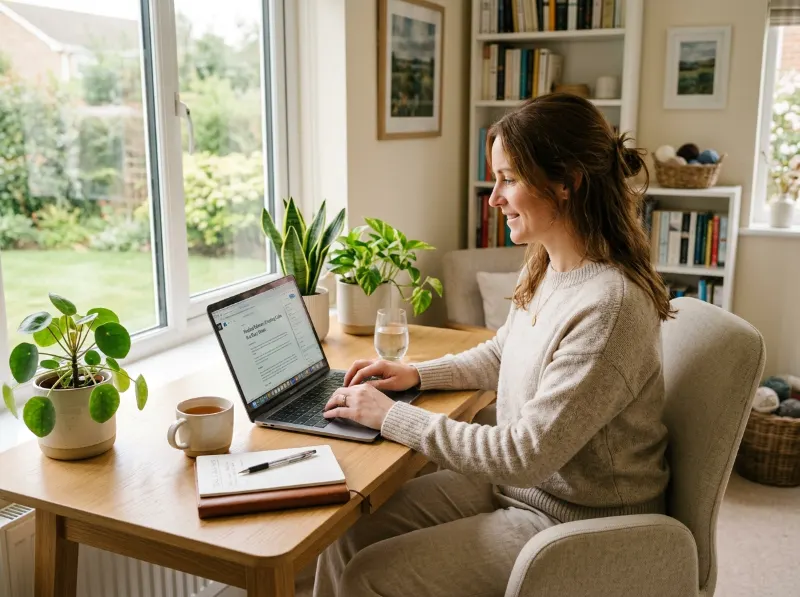
Blogging is one of the most flexible home-based business options for moms who enjoy writing or sharing useful information. You can publish articles about parenting, cooking, crafts, budgeting, or another topic you understand.
- Choose one topic that interests you and helps readers solve a problem.
- Publish helpful articles and learn basic SEO to attract visitors from Google and Pinterest.
- Explore ads, affiliate marketing, and digital products as possible income sources.
How Can You Make Money from a Blog?
A blog can earn money when it attracts readers and offers useful content, products, or services. However, building traffic and income usually takes consistent work.
- Display ads: Earn revenue from ads shown on your pages when you meet a network’s requirements.
- Affiliate marketing: Earn a commission when readers buy through your qualifying links.
- Digital products: Sell useful items such as planners, checklists, templates, or ebooks.
Example: A mom who enjoys organizing small homes could publish storage guides, share related pins on Pinterest, and later sell printable home organization planners. This is an example of a possible business model, not a promise of earnings.
2. Offer Freelance Writing Services
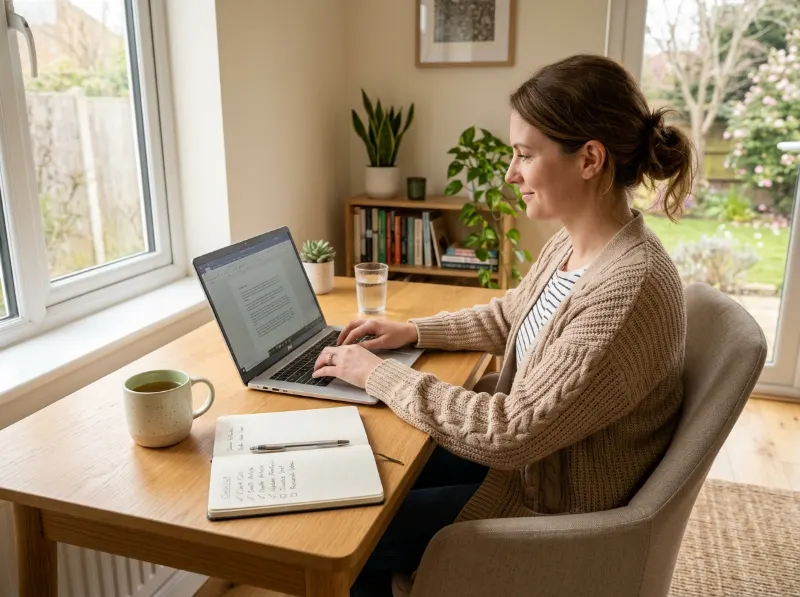
Freelance writing suits moms who enjoy writing clear, helpful content. Businesses need blog posts, website pages, product descriptions, and email content. You can begin with one service and accept projects that fit your schedule.
- Write a few sample articles to demonstrate your skills.
- Find clients through freelance platforms, job boards, or direct outreach.
- Set clear deadlines and agree on the project scope before starting.
Example: A mom who enjoys writing about food could create sample recipes and pitch them to food blogs. She can begin with small projects and build a portfolio as she gains experience.
You can also explore freelance services such as proofreading and editing if you prefer improving existing text instead of writing from scratch.
3. Become a Virtual Assistant
A virtual assistant helps business owners with online tasks they do not have time to manage. This can be a practical online business for moms who are organized, comfortable using a computer, and good at following instructions.
- Manage emails, calendars, files, or customer messages.
- Help clients schedule social media posts and update spreadsheets.
- Start with one or two services and expand as your skills improve.
Example: A small online shop owner may need help answering customer questions and updating product listings. A virtual assistant can handle these tasks remotely during agreed working hours.
Which Virtual Assistant Services Can You Offer?
Choose tasks you already know how to complete. You can learn additional tools later as clients request more support.
- Email management: Organize messages and draft replies.
- Pinterest assistance: Schedule pins and organize boards.
- Admin support: Update spreadsheets, organize files, and manage calendars.
- Customer support: Answer common questions and track orders.
4. Provide SEO and Social Media Services

Businesses need help reaching customers online. If you enjoy learning digital tools, you can offer SEO, Pinterest management, or social media support. These services let you build useful skills and work with clients remotely.
- Help businesses find relevant keywords and improve website content.
- Create social media graphics and schedule posts.
- Track basic results, such as clicks, reach, and website visits.
Example: A local bakery may need help sharing product photos on Pinterest and improving the titles of its website pages. You could start with one clearly defined service instead of offering every type of marketing.
SEO means improving a website so search engines can understand its pages and show them to relevant searchers. Learn the basics before promising results to clients.
5. Turn Your Craft Skills into a Business
Do you enjoy sewing, painting, knitting, making jewelry, or creating home decorations? A craft business lets you turn those skills into products people can buy. Start with a small collection before investing in many supplies.
- Choose products you can make safely and consistently.
- Calculate material costs, packaging, delivery, and your working time.
- Photograph your products clearly and promote them online or locally.
Example: A mom who enjoys making greeting cards could create a small collection for birthdays and holidays. She can show samples to potential buyers before producing larger quantities.
For more inspiration, read our guide on how to start a crafting blog. You could also share tutorials and project ideas to attract people who enjoy handmade work.
6. Open an Online Shop for Handmade or Digital Products
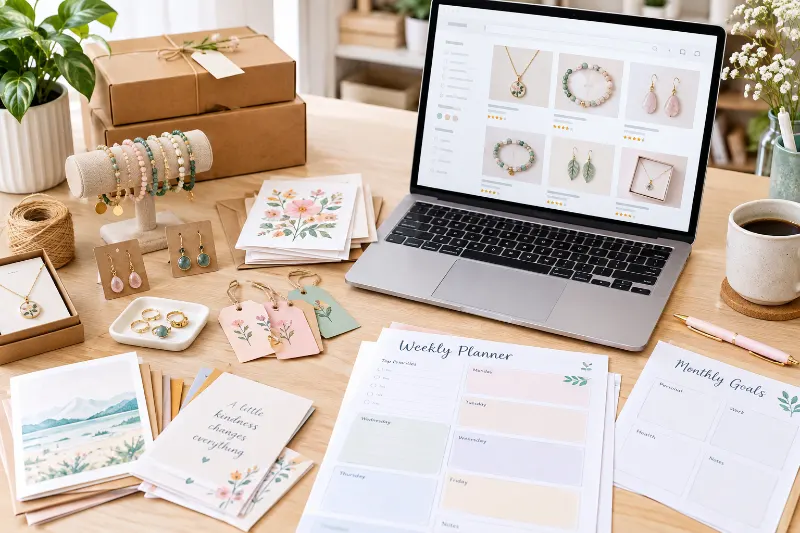
An online shop can help you sell products without renting a physical store. You might offer handmade gifts, printable planners, party decorations, or other items that match your skills and customer needs.
- Choose a product category and research what buyers want.
- Create clear product photos or previews, descriptions, and prices.
- Check platform fees, payment rules, delivery needs, and seller policies before opening your shop.
Example: A mom who enjoys planning could design printable weekly planners. She could sell downloadable files, so buyers receive the products digitally instead of waiting for a parcel.
What Can You Sell in an Online Shop?
Start with a small group of related products. This makes it easier to create listings, manage orders, and understand which items attract buyers.
- Handmade jewelry or accessories.
- Printable calendars and planners.
- Personalized cards and party invitations.
- Craft patterns and downloadable templates.
Our guide to things to sell on Etsy can help you explore more product ideas. Review Etsy’s current seller rules and fees before choosing the platform.
7. Resell Items You No Longer Need
Reselling lets you earn money by selling items that still have value. You can begin with things you already own, then explore secondhand goods if you understand their condition, demand, and selling price.
- Look for clean, usable clothing, books, toys, or home items.
- Check similar listings to estimate a fair price.
- Take clear photos and describe any wear or damage honestly.
Example: A family may have children’s books and outgrown clothes in good condition. Selling these items can free up space and bring in some money, although sales are not guaranteed.
Once you understand the process, you could source suitable secondhand items for resale. Include purchase costs, platform fees, packaging, and delivery when calculating potential profit.
8. Plan Small Events from Home
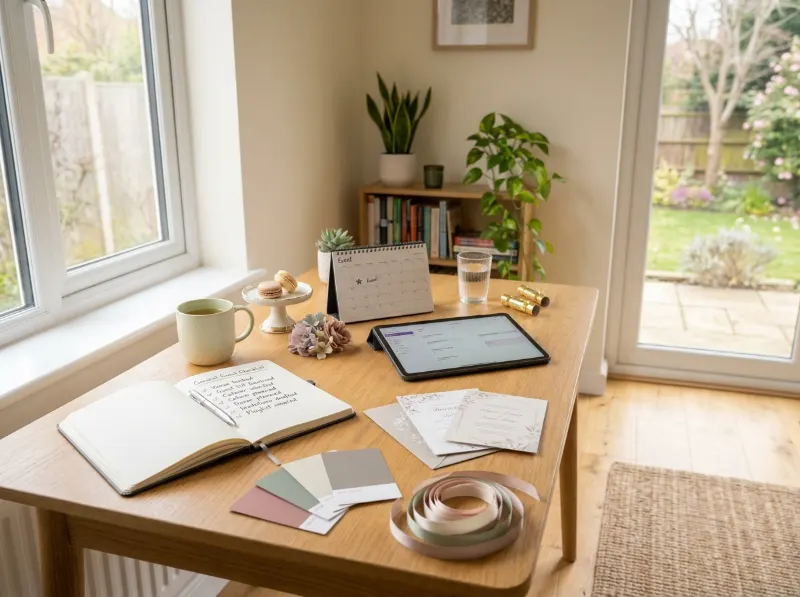
Event planning can suit moms who enjoy organizing details and communicating with people. You can help plan birthdays, baby showers, family celebrations, or small business events without managing large weddings or expensive functions at the start.
- Create event checklists, schedules, and simple budgets.
- Coordinate decorations, vendors, invitations, and guest details.
- Start with small events and build a portfolio using permission-based photos.
Example: A parent organizing a child’s birthday party could need help choosing decorations, tracking expenses, and coordinating delivery times. You could offer a basic planning package for these tasks.
You do not need to buy every decoration yourself. Work with clients to set a budget and confirm who will pay vendors, purchase supplies, and handle last-minute changes.
9. Offer Errand and Local Support Services
Some business ideas do not require a laptop all day. If you have suitable transport, local demand, and reliable childcare, you could offer errands or practical support to nearby customers.
- Shop for groceries or pick up approved orders.
- Help with parcel drop-offs or simple local errands.
- Set clear service areas, prices, availability, and safety rules.
Example: A busy neighbor may need someone to collect a prepared order or deliver essential items locally. You could offer this service at an agreed fee, depending on local rules and demand.
Remember that local errands may require travel, time outside the home, and extra childcare. Our guide on how to run errands for money explains more ways to explore this type of work.
10. Start a Small Home-Based Catering Business

If you enjoy cooking and have a few dishes people love, a small catering business may be worth exploring. You could prepare food for small gatherings, lunch orders, or special occasions, depending on local food safety rules and your available time.
- Choose a small menu you can prepare consistently.
- Calculate ingredient, packaging, delivery, and labor costs.
- Check local permits, food handling requirements, and kitchen rules before accepting orders.
Example: A mom who makes excellent baked snacks could ask local customers about interest in small party boxes. She can test demand before buying equipment or accepting large orders.
Food businesses require careful planning. Set realistic order limits and confirm delivery times so the work fits your family routine.
How to Choose the Right Business Idea for Your Family
The best choice is not always the business with the biggest earning potential. Look for work that matches your skills, budget, childcare needs, and the time you can give it each week.
- Check your skills: Choose something you can already do or can learn with a realistic amount of practice.
- Set a starting budget: Decide how much you can afford to spend without using money needed for household bills.
- Test demand: Talk to potential customers or offer a small trial service before making a large investment.
You should also plan for quiet work periods, interruptions, and family responsibilities. A business that fits your real routine is easier to maintain than one that depends on working every day without breaks.
How to Start a Business from Home with a Small Budget
You do not need to launch a full business on day one. Start with one offer, a simple way for customers to contact you, and a clear plan for tracking costs.
- Choose one idea. Pick the option that best matches your current skills.
- Research customers. Find out who needs your product or service and what they value.
- Create a simple offer. Explain what you provide, who it helps, and what it costs.
- Find your first customers. Use suitable local groups, Pinterest, freelance platforms, or direct outreach.
- Track your results. Record money received, business costs, time spent, and customer feedback.
For example, a new freelance writer could prepare two writing samples, choose one type of client, and contact a few suitable businesses. This helps test interest before spending money on a website or paid tools.
If you need to keep your startup costs under control, our guide to money-saving tips can help you think carefully about spending and budgeting.
Common Mistakes to Avoid When Starting a Mom-Owned Business
Starting small can reduce risk, but it does not remove every challenge. Watch out for these mistakes before investing too much time or money.
- Trying too many ideas at once: Focus on one business until you understand its workload and customer demand.
- Ignoring costs: Include supplies, platform fees, delivery, taxes where applicable, and your time.
- Expecting instant income: New businesses often need time to attract customers and improve their offers.
- Underpricing your work: Set prices that account for both expenses and the time you spend.
- Forgetting boundaries: Set working hours and explain your availability to clients.
A simple plan can help you make better choices. Review your progress regularly and change your approach when the facts show that something is not working.
Frequently Asked Questions
1. What is the easiest business for a stay-at-home mom to start?
The easiest option depends on your current skills and resources. Freelance writing, virtual assistance, and reselling items you already own may require less initial spending than a product-based business. Each option still takes time and effort.
2. Which home business can I start with little money?
Writing, virtual assistance, and some social media services can often begin with a computer, internet access, and skills you already have. Check the tools, training, and other costs before starting.
3. Can a stay-at-home mom start a business with no experience?
Yes, you can start by learning one skill, practicing it, and creating sample work. You should be honest about your experience and begin with projects you can complete reliably.
4. How can I manage a business while caring for children?
Choose work that fits your available hours. Set small goals, plan around your family’s routine, and tell clients when you are available. Some tasks may need quiet time or reliable childcare.
5. How long does it take for a home business to make money?
There is no fixed timeline. Results depend on customer demand, your offer, pricing, marketing, and how much time you can invest. Plan your household budget without relying on income that has not arrived.
Conclusion
The best business ideas for stay-at-home moms begin with skills, realistic costs, and a schedule that works for the family. Blogging, freelancing, online shops, and local services all offer different ways to get started.
Choose one idea, test it on a small scale, and improve it as you learn. You do not need to build everything at once.
Which of these 10 business ideas fits your skills and schedule best? Start by writing down one idea and the first small step you can take this week.






- Be Respectful
- Stay Relevant
- Stay Positive
- True Feedback
- Encourage Discussion
- Avoid Spamming
- No Fake News
- Don't Copy-Paste
- No Personal Attacks
- Be Respectful
- Stay Relevant
- Stay Positive
- True Feedback
- Encourage Discussion
- Avoid Spamming
- No Fake News
- Don't Copy-Paste
- No Personal Attacks
