How to Become a Proofreader: A Beginner’s Guide to Getting Started
Published: 21 Oct 2026
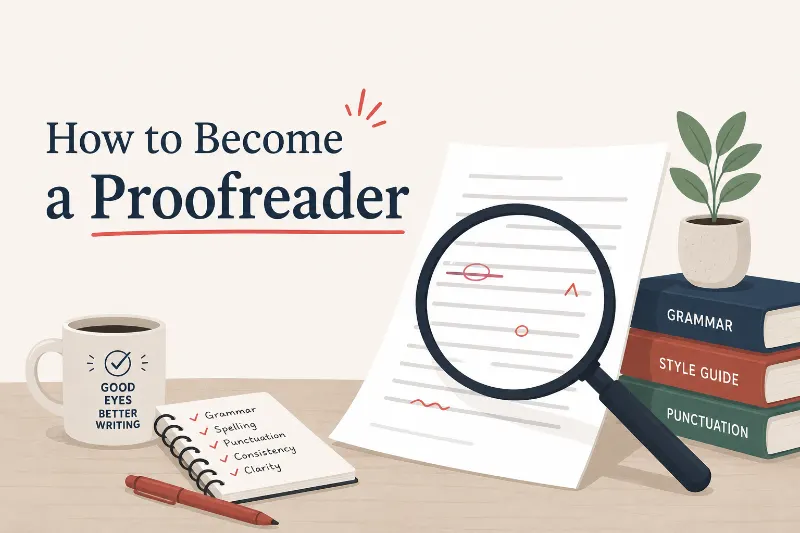
If you enjoy reading and spotting spelling mistakes, proofreading could be a useful freelance skill to learn. You do not always need a degree or years of experience to start.
This guide explains how to become a proofreader, which skills to learn, how to practise, and where to find your first clients. Are you ready to turn your eye for detail into a practical online skill?
To become a proofreader, learn grammar and punctuation, practise editing real documents, build a small portfolio, and apply for beginner-friendly freelance jobs. You can start learning without formal qualifications, but strong language skills and reliable work matter.
What Does a Proofreader Actually Do?
A proofreader checks written content for small errors before publication. Writers, bloggers, businesses, and students may need this service to make their documents clear, accurate, and professional.
- Correct spelling, punctuation, grammar, and typing mistakes.
- Check headings, spacing, formatting, and consistency.
- Review the final text without changing the writer’s main message.
Proofreading vs. Editing: What Is the Difference?
Proofreading focuses on surface errors, while editing can involve improving sentence structure, flow, and meaning.
- Proofreading: Fixes typos, missing commas, and inconsistent formatting.
- Copy editing: Improves grammar, clarity, and sentence structure.
- Developmental editing: Helps improve a document’s ideas, structure, and overall direction.
Example: A blogger writes, “This tips helps you save money.” A proofreader corrects it to “These tips help you save money.” An editor might also suggest rewriting the paragraph to make the advice easier to follow.
How Much Can a Beginner Proofreader Earn?
Proofreading income depends on your skills, language, location, client type, and workload. Beginners often charge less while building experience, so treat online income estimates as guides rather than promises.
- Set your rate by word, page, hour, or project.
- Compare current rates on freelance platforms before choosing a price.
- Track your actual working time to understand your earnings.
Example: If you charge $20 for a project and spend two hours completing it, your gross rate is $10 per hour before fees and taxes. This is an illustration, not a typical income claim.
Do You Need a Degree to Become a Proofreader?
Most entry-level proofreading work does not automatically require a university degree. Clients care about language ability, accuracy, and reliability, although some specialist roles require formal training or subject knowledge.
- Improve your grammar and punctuation before applying for jobs.
- Consider training if you need structured lessons and practice.
- Check each job listing for education or certification requirements.
Example: A small business may hire a proofreader based on a successful sample test. A legal publisher may require experience with legal documents and specialist terminology.
How Can You Become a Proofreader With No Experience?
You can prepare for your first proofreading project by learning the basics, practising on sample documents, and showing clients what you can do. Follow these steps to build a strong starting point.
Step 1: Build the Core Skills
Good proofreaders notice small errors and apply language rules consistently.
- Learn spelling, grammar, punctuation, and capitalization.
- Practise spotting repeated or missing words.
- Review common mistakes in your target language.
- Use a trusted grammar checker to support your work, not replace it.
Step 2: Learn a Reliable Proofreading Process
A clear process helps you catch more mistakes and avoid rushing through a document.
- Read the full text once to understand its meaning.
- Review each sentence carefully for errors.
- Check formatting, headings, names, and numbers.
- Read the final version again before delivery.
Example: Practise with an old blog post. Correct its spelling first, then review punctuation and formatting in a separate pass. Compare your corrections with a trusted reference guide.
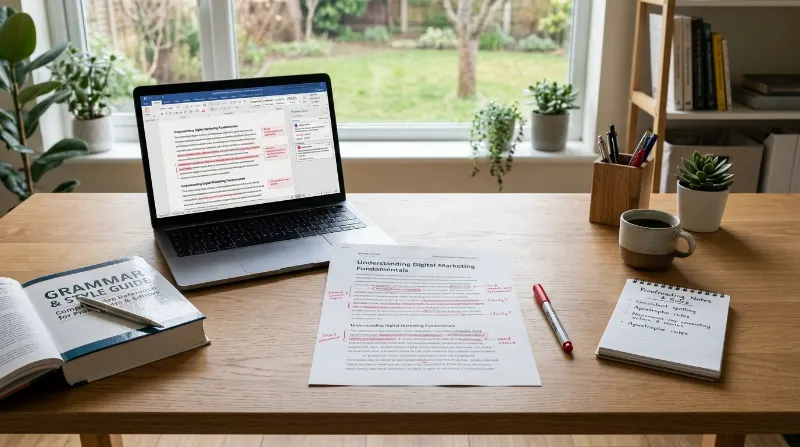
Step 3: Choose Your Learning Resources
Structured lessons can help you understand grammar rules and professional proofreading methods. Start with free resources, then consider paid training when you know which skills you need to improve.
- Study reliable grammar guides and style manuals.
- Compare free tutorials with online proofreading courses.
- Practise each new rule using sample documents.
- Check course content before paying for a certificate.
Step 4: Choose a Niche That Fits You
A niche is a specific type of work you want to serve. Choosing one can help you practise relevant content and explain your services to the right clients.
- Blog posts and website content.
- Business documents, newsletters, and reports.
- Books, academic papers, or technical documents.
Example: If you enjoy reading blog articles, start with website content. You can learn how bloggers use headings, links, and consistent formatting before moving into more specialized work.
Step 5: Practise Before You Look for Clients
Practice gives you a chance to improve your accuracy and create examples of your work. You do not need to wait for a paid client to begin building your skills.
- Correct errors in public-domain texts or your own writing.
- Ask permission before using someone else’s document.
- Compare your corrections with a reliable answer key.
- Record the mistakes you miss and practise them again.
For your first portfolio sample, take a short practice article and show the original sentence beside the corrected version. Label it clearly as a sample, not paid client work.
Step 6: Create a Portfolio That Shows Your Ability
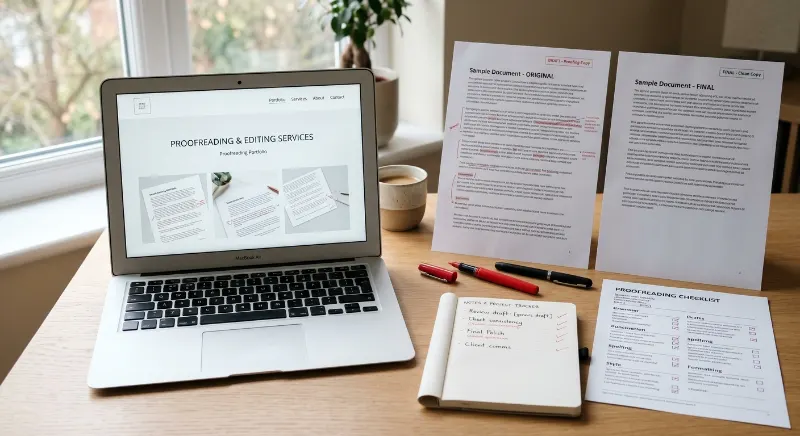
A proofreading portfolio gives potential clients evidence of your work. It can be a simple document or web page with a few carefully prepared samples.
- Include two or three short before-and-after samples.
- Explain the types of errors you corrected.
- Add your services, contact details, and working languages.
- Never publish private client documents without permission.
Example: A sample could show a paragraph with spelling and punctuation mistakes beside your corrected version. This lets clients see your attention to detail without relying on unverified claims.
Step 7: Find Your First Clients
Start with clients who need the type of content you already understand. Make your offer clear, share relevant samples, and apply only to suitable projects.
- Search freelance marketplaces and remote job boards for proofreading jobs.
- Contact bloggers, small businesses, and content creators with a relevant offer.
- Check each client’s requirements before sending an application.
- Avoid jobs that demand large unpaid tests or upfront fees to secure work.
You can also search for remote proofreading jobs using terms that match your niche. Read each listing carefully because some roles combine proofreading with editing, writing, or fact-checking.
Step 8: Set Fair Rates and Grow Your Service
Your rates should reflect the document, its difficulty, the deadline, and the time required. Review current proofreading rates in your target market before quoting a price.
- Decide whether to charge by word, page, hour, or project.
- Set a clear scope and delivery date.
- Track feedback, revision requests, and time spent.
- Raise rates gradually as your skills and demand improve.
You can explore the blog income report to learn how a blog can discuss income and business performance. Use it as a related resource for understanding online work, not as a promise of proofreading earnings.
Step 9: Build Trust and Find Repeat Work
Reliable service can help you turn a one-time project into an ongoing client relationship. Focus on clear communication and consistent quality rather than promising perfect results.
- Confirm the project scope before starting.
- Protect client files and private information.
- Deliver work on time and explain any questions.
- Ask satisfied clients for honest testimonials.
A simple spreadsheet can track applications, client names, project deadlines, and payments. This keeps your new freelance service organized while you look for steady work.
Where Can You Find Proofreading Work Online?
Several platforms and direct outreach methods can help you find clients. The best option depends on your experience, language skills, and the type of documents you want to proofread.
- Create a complete profile on a suitable freelance marketplace.
- Search job boards for proofreading and copy-editing roles.
- Contact website owners who publish regular written content.
Example: A beginner who understands blog content can contact small website owners and offer to proofread a short article. A clear sample and a polite message can help start the conversation.
If you are starting with a limited budget, you can also read how to save money on rent to explore practical ways to manage household costs while building a freelance service.
How Can You Improve Your Chances of Success?
Consistent practice and honest communication can help you build a stronger reputation. Focus on quality first, then expand your services as you gain confidence and experience.
- Keep learning new grammar rules and style guidelines.
- Review client feedback and correct repeated mistakes.
- Offer related services only when you have the required skills.
A freelance proofreader can also develop a simple professional website, share useful writing tips, or connect with bloggers in online communities. Choose methods that suit your time and budget.
If you are studying while building your skills, how to save money for students offers additional ideas for managing everyday expenses.
Frequently Asked Questions About Becoming a Proofreader
Can I become a proofreader with no experience?
Yes, you can start learning without paid experience, but you need to prove your skills.
- Practise with sample documents.
- Create a small portfolio.
- Apply for beginner-friendly projects.
How long does it take to learn proofreading?
The time depends on your starting skills and practice routine. Some learners understand basic rules quickly, while others need more time to develop accuracy.
- Practise for a set period each week.
- Review mistakes after each exercise.
- Test your skills before accepting paid work.
Do I need a certificate to become a proofreader?
Not every client requires a certificate. Some specialist roles may expect formal training or subject knowledge.
- Read job requirements carefully.
- Build strong language skills.
- Choose training based on your goals.
What tools do proofreaders use?
Proofreaders use writing software, reference guides, and document review tools to find and correct errors.
- Use spellcheck as a first review.
- Learn Track Changes in Microsoft Word or similar tools.
- Use a trusted grammar checker to support manual checks.
Can proofreading become a full-time job?
Yes, proofreading can become a full-time service for some people, but steady work is not guaranteed. Your results depend on client demand, work quality, rates, and repeat business.
- Start with small projects.
- Track income and expenses.
- Build repeat client relationships.
You can also explore money-saving tricks and the $1,000 monthly challenge for budgeting ideas as you manage freelance income.
Final Thoughts
You can begin proofreading by learning grammar, practising with sample documents, and building a simple portfolio. Focus on one niche and apply for suitable projects as your skills improve.
Keep your claims honest and your work consistent. If you want to explore other ways to earn online, check out these best paid survey sites in Canada as a separate option.
Your next step: Choose a short article today, correct its mistakes, and save the result as your first practice sample. What type of content would you enjoy proofreading most?



- Be Respectful
- Stay Relevant
- Stay Positive
- True Feedback
- Encourage Discussion
- Avoid Spamming
- No Fake News
- Don't Copy-Paste
- No Personal Attacks
- Be Respectful
- Stay Relevant
- Stay Positive
- True Feedback
- Encourage Discussion
- Avoid Spamming
- No Fake News
- Don't Copy-Paste
- No Personal Attacks
