10 Advantages and Disadvantages of Mobile Phones
Published: 15 Jun 2026
In today’s world, it is almost impossible to imagine life without a smartphone. Whether someone is a student rushing to submit an assignment, a professional managing deadlines, or a parent trying to stay in touch with family, the mobile phone has become a constant companion. The importance of mobile phones in daily life can hardly be overstated — they inform, connect, educate, and entertain all at once.
From sleek iPhones to feature-packed Android devices, smartphones have evolved into powerful pocket-sized computers. But as with any technology, they come with a mixed bag of blessings and challenges. Understanding the advantages and disadvantages of mobile phone use helps individuals, especially students, make smarter and more responsible decisions about how they engage with this technology.
This article takes a balanced look at the pros and cons of mobile phones, exploring both the benefits and drawbacks of mobile phones in academic life, daily routines, and overall well-being. If someone is writing a mobile phone advantages and disadvantages essay or simply trying to understand the impact of this technology, this guide covers it all.
Advantages of Mobile Phone — 10 Key Benefits
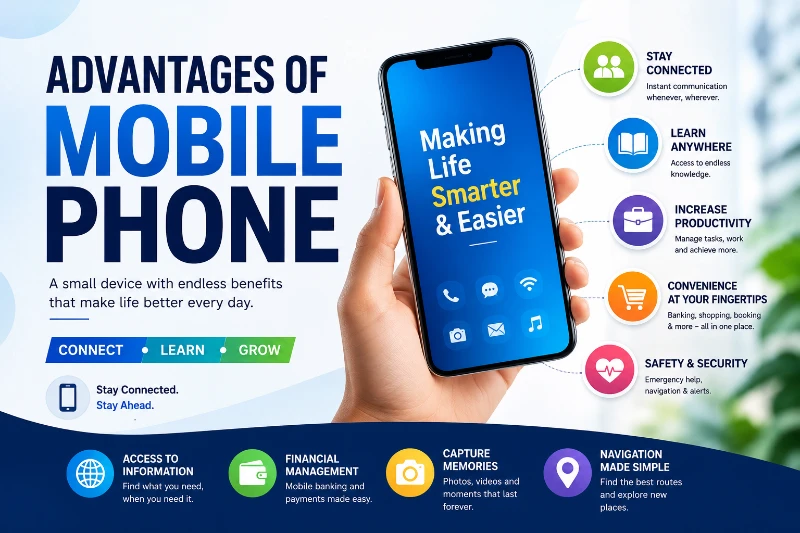
Modern smartphones are far more than just calling devices. They serve as learning tools, productivity boosters, safety nets, and creative platforms. Here are the ten most significant advantages of using mobile phones.
1. A Powerful Communication Tool
At its very core, the mobile phone exists as a communication tool — and it fulfills that role brilliantly. Students can stay in touch with teachers, parents, and classmates in real time, regardless of where they are. Digital communication through calls, video chats, messaging apps, and emails has made the world a more connected place.
The role of mobile phones in communication has evolved far beyond voice calls. Today, a student can collaborate on a group project with classmates across the city without leaving their room. This ease of digital communication has redefined how people maintain relationships and share information.
2. Easy Access to the Internet Anytime
One of the most transformative advantages of using mobile phones is the ability to access the internet from virtually anywhere. Mobile phones serve as a direct gateway to an endless source of information — students can look up facts, read articles, watch tutorials, and explore research materials all from a single device.
This kind of instant internet access has democratized knowledge. Students in rural areas who might not have access to well-stocked libraries can now browse academic journals, news, and educational content online. Online learning through mobile phones has become a genuine and effective way to acquire knowledge.
3. Advantages of Mobile Phones in Education
The advantages of mobile phones in education are profound and far-reaching. Mobile technology in education has shifted the traditional classroom experience. Students no longer have to wait until school hours to get answers — they can explore topics, practice skills, and review lessons anytime they wish.
Educational apps like Khan Academy, Duolingo, and Google Classroom have brought personalized, interactive learning experiences to millions of students worldwide. Digital learning has made it possible to understand complex subjects through videos, quizzes, and interactive exercises — all accessible through a smartphone.
4. Access to Learning Resources and Study Apps
Gone are the days when students had to lug heavy bags full of textbooks. Thanks to mobile phones, learning resources are now available at the tap of a screen. E-books, lecture notes, academic papers, and video lessons can all be stored and accessed from one device.
Study apps and productivity apps have made exam preparation much more efficient. Students can create digital flashcards, set revision reminders, access past papers, and even receive feedback on their writing through AI-powered tools. Mobile phone benefits for learning are especially evident during exam seasons, when quick and organized access to information makes a real difference.
5. Support for Online Classes
The COVID-19 pandemic showed the world just how vital online classes are. Even beyond that global crisis, mobile phones have continued to be the primary device through which millions of students attend virtual lectures, webinars, and interactive sessions.
Mobile phones in modern education now support platforms like Zoom, Google Meet, and Microsoft Teams — enabling students to participate in real-time lessons from home. The benefits of smartphones for students in this regard are undeniable. Online learning through mobile phones has ensured that education does not stop, no matter the circumstances.
6. Boosts Organization Skills and Productivity
A smartphone, when used wisely, is a remarkable productivity machine. Calendar apps, to-do lists, reminder tools, and note-taking platforms help students develop strong organizational skills. Instead of forgetting deadlines or losing track of assignments, students can schedule tasks, set alerts, and plan their study sessions effectively.
Productivity tools like Google Calendar, Notion, and Microsoft OneNote have become go-to companions for students who want to stay on top of their academic and personal responsibilities. When it comes to mobile phones and student productivity, the right apps can genuinely transform a student’s academic performance for the better.
7. Instant Problem-Solving Ability
Life is full of unexpected challenges, and a mobile phone equipped with the right apps and internet access gives students incredible instant problem-solving ability. Whether it is looking up a math formula, translating a word in a foreign language, or finding directions to a new location, the answers are always a quick search away.
The multitasking ability of modern smartphones also means students can listen to a podcast, take notes, and check references simultaneously. The uses of mobile phones for students in this sense extend well beyond academics — they are practical tools for everyday life too.
8. Encourages Collaboration with Classmates
Mobile phones make collaboration with classmates easier than ever before. Group chats, shared documents, and video calls allow students to work together on projects without having to physically meet. This has been particularly valuable in situations where students live far apart or have different schedules.
When used effectively, mobile phone usage among students can foster teamwork, communication, and mutual learning. Apps like Google Docs allow multiple students to work on the same document simultaneously, enhancing both collaboration and academic performance.
9. Importance of Mobile Phones in Daily Life
Beyond academics, the importance of mobile phones in daily life is immense. From ordering groceries and booking medical appointments to navigating unfamiliar streets and making bank transfers, mobile phones handle a wide range of everyday tasks efficiently.
For students living away from home, a mobile phone is both a lifeline and a lifestyle tool. It keeps them connected to family, helps them manage finances, allows them to entertain themselves during breaks, and lets them stay informed about world events. The advantages of using mobile phones in daily life are simply hard to count.
10. Emergency Safety and Security
One of the most underrated but critically important advantages of mobile phones is the safety net they provide in emergencies. Students who are traveling alone, working late, or facing unexpected situations can call for help immediately.
Parents feel reassured knowing their children carry a mobile phone that can be used to reach them or call emergency services instantly. Online safety for students is also supported through built-in features like location sharing, emergency SOS, and contact blocking. When used responsibly, privacy protection features on smartphones add an additional layer of security to a student’s digital life.
Disadvantages of Mobile Phone — 10 Key Drawbacks
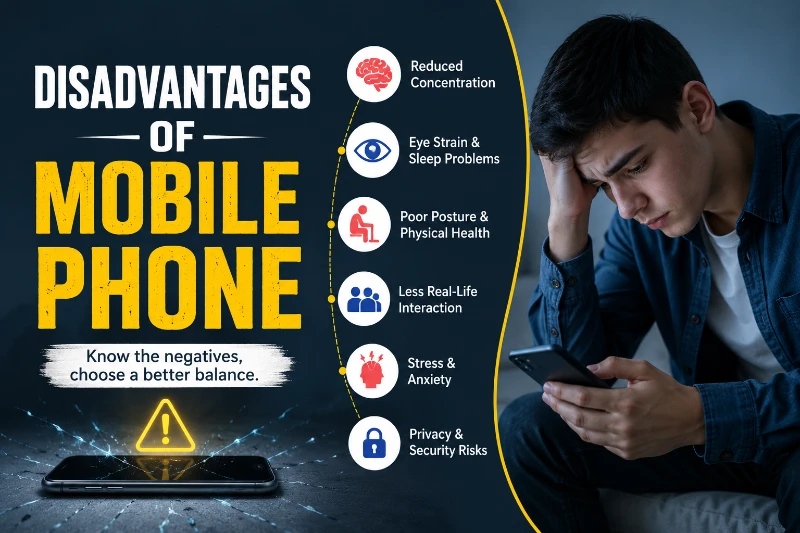
While the benefits of mobile phones are extensive, it is equally important to acknowledge the challenges and risks they bring. Understanding these drawbacks can help students and their families make more informed, balanced decisions about mobile phone use.
1. Mobile Phone Addiction and Its Effects
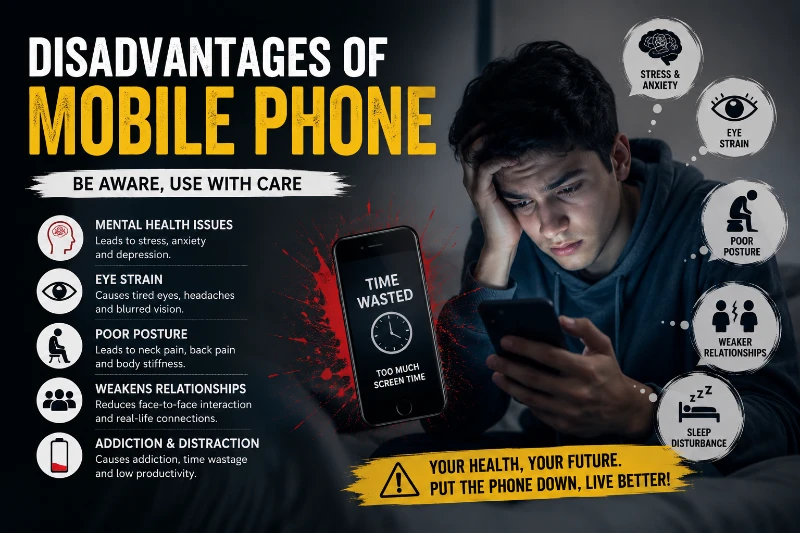
Perhaps the most widespread concern today is mobile phone addiction. Students, particularly teenagers, often find themselves unable to put their phones down — scrolling through feeds, watching videos, and chatting for hours on end. Mobile phone addiction effects are wide-ranging and include reduced concentration, poor time management, and a growing inability to focus on tasks for extended periods.
Mobile phone addiction among teenagers is a particularly serious issue. When the habit of constantly checking the phone overrides studying, sleeping, eating, and socializing, it shifts from a convenience to a compulsion. Recognizing the signs early and setting boundaries is essential to preventing this from taking a toll on a student’s overall well-being.
2. Social Media Distractions in the Classroom
Social media distractions represent one of the biggest disadvantages of mobile phones for students. Platforms like Instagram, TikTok, Snapchat, and YouTube are designed to grab and hold attention — and they do so very effectively. A student who picks up their phone to check a notification often ends up spending thirty minutes scrolling before realizing what happened.
Smartphone distractions in classrooms have become a growing concern for teachers worldwide. Even when students intend to use their phones for academic purposes, the temptation to switch to social media is always just one tap away. This constant distraction directly impacts academic performance and makes it harder for students to stay engaged with their lessons.
3. Harmful Effects of Mobile Phones on Health
The harmful effects of mobile phones on physical health are becoming increasingly difficult to ignore. Students who spend large portions of their day hunched over a screen are at risk of developing neck pain, eye strain, poor posture, and headaches. These health effects of mobile phone usage compound over time and can lead to long-term physical discomfort.
Physical inactivity is another major concern. When students choose to sit and scroll instead of going for a walk, playing a sport, or engaging in outdoor activities, their overall physical fitness suffers. The sedentary lifestyle that often accompanies excessive smartphone use can increase the risk of obesity and related health issues over time.
4. Sleep Disturbance Caused by Screen Time
Sleep disturbance is one of the most commonly reported negative effects of mobile phone use among students. The blue light emitted by phone screens interferes with the production of melatonin, the hormone responsible for regulating sleep. Students who use their phones late at night often struggle to fall asleep and may end up with significantly less rest than their bodies need.
Poor screen time management leads to a vicious cycle — lack of sleep causes fatigue during the day, which reduces concentration in class, which in turn leads to poorer academic results. The effects of screen time on students are not just limited to tiredness; chronic sleep deprivation can also affect mood, memory, and overall cognitive function.
5. Negative Impact on Mental Health
The connection between smartphone use and mental health effects has been the subject of extensive research in recent years. Constant exposure to social media can lead to feelings of inadequacy, anxiety, and depression — particularly among teenagers who compare their lives to the filtered, curated highlights they see online.
The smartphone’s impact on mental health is real and measurable. Students who spend excessive time on their phones often report feeling more stressed, lonely, and disconnected from real-world relationships. Mobile phone addiction effects extend into emotional territory too, fueling a cycle where students turn to their phones for comfort, only to feel worse afterward.
6. Cyberbullying Risks for Students
One of the darkest sides of mobile phone use is the rise of cyberbullying. Unlike traditional bullying, cyberbullying can happen any time of day or night and follows victims into the perceived safety of their own homes. Students who are targeted online often suffer from severe emotional distress, social withdrawal, and, in serious cases, long-term psychological harm.
Cyberbullying risks are heightened on social media platforms, messaging apps, and online gaming communities. Online safety for students requires active involvement from both parents and teachers, along with open conversations about appropriate online behavior, reporting mechanisms, and the importance of treating others with respect in digital spaces.
7. Exposure to Inappropriate Content
The open nature of the internet means that students — particularly younger ones — can easily stumble upon content that is violent, sexually explicit, or otherwise inappropriate. Without proper parental controls and digital literacy education, children and teenagers are vulnerable to exposure to inappropriate content that can harm their development.
The negative impact of mobile phones in this regard is a serious concern for parents and educators. Mobile phone usage among students without proper supervision can lead to encounters with content that distorts their understanding of the world, relationships, and personal values. Teaching students about media literacy and responsible browsing habits is an important counterbalance to this risk.
8. Privacy and Security Concerns
Mobile phones hold enormous amounts of personal information — contacts, messages, photos, bank details, and location data. Without proper awareness and precautions, this information can be vulnerable to hackers, scammers, and data-mining companies. Mobile phone privacy issues are an increasingly urgent concern in the digital age.
Privacy and security concerns are especially relevant for students who may not fully understand the risks of sharing personal data online, clicking on suspicious links, or using unsecured Wi-Fi networks. Privacy protection should be a key topic in digital education, with schools and parents working together to ensure students understand how to protect their information online.
9. Disadvantages of Excessive Mobile Phone Use on Studies
While mobile phones can support learning when used wisely, the disadvantages of excessive mobile phone use on academic life are significant. Students who spend more time on their phones than on their studies often see a direct negative correlation in their grades. Constant connectivity means constant distraction, and this makes deep, focused study sessions very difficult to achieve.
The disadvantages of mobile phones for students become most apparent when phones are used during study time, just before exams, or as a procrastination tool. Mobile phones and academic success pull in opposite directions when the device is used without boundaries. The impact of mobile phones on students’ ability to concentrate and retain information is one of the most discussed concerns in modern education.
10. Physical Inactivity and Lifestyle Issues
The rise of smartphone culture has contributed to a significant drop in physical activity among young people. When students spend hours each day watching videos, playing mobile games, or scrolling through social media, physical exercise tends to get pushed aside. Physical inactivity is a serious health consequence of excessive mobile phone use.
Health effects of mobile phone usage are not limited to the eyes and spine — they extend to cardiovascular health, muscle development, and mental resilience, all of which benefit from regular physical activity. Encouraging students to take regular breaks from screens, engage in outdoor activities, and maintain a balanced lifestyle is essential for their long-term health.
Pros and Cons of Mobile Phones — Quick Comparison
Here is a concise summary of the merits and demerits of mobile phones to help students and parents quickly understand both sides:
| Advantages (Pros) | Disadvantages (Cons) |
| Powerful communication tool | Risk of mobile phone addiction |
| Easy internet access anywhere | Social media distractions |
| Supports education through apps | Harmful effects on physical health |
| Access to learning resources & e-books | Sleep disturbance from screen time |
| Enables online classes | Negative mental health effects |
| Boosts organization & productivity | Cyberbullying risks |
| Instant problem-solving ability | Exposure to inappropriate content |
| Encourages student collaboration | Privacy and security concerns |
| Essential in daily life tasks | Drops in academic performance |
| Emergency safety & security | Physical inactivity & lifestyle issues |
Positive and Negative Effects of Mobile Phones on Students
Understanding the positive and negative effects of mobile phones on students requires looking at the bigger picture. Mobile phones are neither entirely good nor entirely bad — their impact largely depends on how, when, and how much they are used.
On the positive side, the impact of mobile phones on students includes improved access to information, stronger communication with teachers and peers, and the ability to continue learning outside the classroom. When students use their smartphones as educational tools, they can achieve more in less time and take greater ownership of their learning journey.
On the negative side, mobile phone effects on education become problematic when usage is excessive or unregulated. Smartphone distractions in classrooms reduce the effectiveness of lessons. Students who check their phones frequently during class retain less information and often feel less engaged with their studies.
Mobile phone usage among students must therefore be guided by clear expectations, healthy habits, and an understanding of both the opportunities and the risks. When balanced correctly, smartphones can be genuinely powerful tools for academic growth and personal development.
How Can Students Use Mobile Phones Responsibly?
The question that many parents and educators find themselves asking is: how can students use mobile phones responsibly? The answer lies in a combination of awareness, rules, and habits. Here are some practical approaches that can make a real difference:
Set clear screen time limits: The importance of responsible mobile phone use starts with setting daily time limits for non-academic screen use. Screen time management tools are available on both Android and iPhone devices, allowing users to track and restrict usage.
Use phones as learning tools: Encourage students to download study apps, educational apps, and productivity apps that support their academic goals. When a mobile phone is used intentionally for learning, the educational benefits of smartphones become clear.
Keep phones away during sleep: One of the most effective ways to combat sleep disturbance is to charge phones outside the bedroom at night. This simple habit can significantly improve sleep quality and daytime concentration.
Talk about online safety: Parents and teachers should have regular conversations with students about online safety for students, cyberbullying, and how to protect their privacy and security concerns online.
Encourage physical activity: Help students build a healthy balance between screen time and physical activity. Sports, outdoor play, and face-to-face social interaction are all essential parts of a well-rounded lifestyle.
Model responsible behavior: Adults play a major role in shaping young people’s habits. When parents and teachers practice responsible phone use themselves, it sends a powerful message about what healthy digital habits look like.
Ultimately, mobile phones and academic success are not mutually exclusive. With the right habits and guidance, students can harness the full potential of mobile technology without letting it dominate their lives.
Frequently Asked Questions (FAQs)
What are the 10 advantages of mobile phones?
The ten main advantages include their role as a communication tool, easy internet access, educational support through apps, access to learning resources and e-books, online class participation, boosted organization and productivity, instant problem-solving, student collaboration, support for daily life tasks, and emergency safety features.
What are the 10 disadvantages of mobile phones?
The ten major disadvantages include mobile phone addiction, social media distractions, harmful effects on physical health, sleep disturbance, negative mental health effects, cyberbullying risks, exposure to inappropriate content, privacy and security concerns, drops in academic performance, and physical inactivity.
What are the benefits of mobile phones for students?
Mobile phone benefits for learning include access to educational apps, digital learning materials, online classes, collaboration tools, and productivity apps. Smartphones help students stay organized, informed, and connected to both academic resources and their teachers.
How do mobile phones affect academic performance?
Mobile phones can both help and hurt academic performance. When used wisely for studying, research, and collaboration, they enhance learning. However, when used excessively for social media, gaming, or entertainment during study time, they significantly reduce concentration and academic results.
What are the harmful effects of smartphones?
Harmful effects of mobile phones include eye strain, poor posture, sleep disturbance, mental health effects such as anxiety and depression, cyberbullying exposure, physical inactivity, and privacy and security concerns.
Are mobile phones good or bad for students?
Mobile phones can be both good and bad for students depending on usage. With responsible use, they are powerful tools for learning and communication. Without proper boundaries, they can be serious distractions that harm both academic and personal well-being.
How do mobile phones help in education?
Mobile phones help in education through access to educational apps, online classes, digital learning platforms, e-books, and study tools. They enable students to learn anytime, anywhere, and to collaborate with classmates and teachers beyond the traditional classroom.
What are the positive and negative effects of smartphones?
Positive effects include enhanced communication, learning support, and productivity. Negative effects include addiction, distraction, mental health challenges, cyberbullying, and disrupted sleep patterns.
Why are mobile phones important in daily life?
The importance of mobile phones in daily life stems from their ability to handle communication, navigation, banking, entertainment, health tracking, and emergency services — all from one compact device that fits in a pocket.
How can students use mobile phones responsibly?
Students can use mobile phones responsibly by setting screen time limits, using study apps and productivity tools, keeping phones away during sleep, staying informed about online safety, maintaining physical activity, and following guidance from parents and teachers.
Conclusion
The advantages and disadvantages of mobile phone use represent two sides of a coin that every student, parent, and educator must learn to navigate thoughtfully. On one hand, the benefits and drawbacks of mobile phones reflect the broader reality of modern technology — enormously useful when harnessed well, and potentially harmful when left unchecked.
Smartphones like iPhones and Android devices are not going away. In fact, their role in education, communication, and daily life is only going to grow. The smartphone advantages and disadvantages explored throughout this article make one thing clear: the mobile phone itself is neither the problem nor the solution. It is the habits, awareness, and choices surrounding its use that make all the difference.
By approaching mobile technology in education with intention, setting sensible boundaries, and fostering open conversations between students, parents, and teachers, it is entirely possible to enjoy the full spectrum of mobile phone benefits while minimizing the risks. Responsible, mindful use is the key — and it starts with understanding both sides of the story.






- Be Respectful
- Stay Relevant
- Stay Positive
- True Feedback
- Encourage Discussion
- Avoid Spamming
- No Fake News
- Don't Copy-Paste
- No Personal Attacks
- Be Respectful
- Stay Relevant
- Stay Positive
- True Feedback
- Encourage Discussion
- Avoid Spamming
- No Fake News
- Don't Copy-Paste
- No Personal Attacks
