How to Make Money on Fiverr for Beginners in 2026
Published: 6 Nov 2026
Fiverr can feel like a big, busy market. Thousands of sellers offer design, writing, video, and other services. As a beginner, you may wonder how anyone finds your gig. The good news is that Fiverr is built for beginners. You need one clear service, a gig buyers can find, and work delivered on time. No degree or agency is required.
This guide shows you how, step by step: pick a service, set up your profile, create a gig that ranks, price your work, and win your first orders — plus the mistakes to avoid from day one.

What Is Fiverr and How Does It Work?
Fiverr is a marketplace where buyers hire freelancers for small, clear jobs. A seller lists a service, called a gig. A buyer finds it through search, pays through Fiverr, and the seller delivers the work. The buyer then leaves a review, and Fiverr releases the payment.
Think of Fiverr like a shop. On other sites, you chase jobs with proposals. On Fiverr, buyers come to you. Your gig is your shop window: if it is clear and attractive, buyers stop and look.
Fiverr takes a 20% fee from each order, including tips. If a buyer pays $50, you keep $40. New sellers can create up to four gigs; good reviews raise your level and let you add more. Fiverr also uses a Success Score based on ratings, reply speed, completed orders, and clients — a strong score helps your gigs rank higher.
Why Fiverr Suits Beginners
Fiverr suits beginners for four reasons. First, it is free to join. You pay nothing to create an account or your first gigs. You only pay the 20% fee when you earn money. Second, buyers come to you, so you do not write a new proposal for every job. Third, small jobs are normal here: one logo, one short video, or one set of social media designs. Each finished job adds a review to your profile. Fourth, Fiverr teaches you freelancing basics — talking to clients, setting delivery times, and handling revisions — which help you on every platform.
Step 1: Pick One Service You Can Deliver Well
Pick one service. A profile that says “I do design, writing, video, data entry, and marketing” tells buyers nothing — buyers want a specialist. Start with what you already know: list skills from a job, school, or hobby, then ask three questions. Can you deliver it to a paying client this week? Would a small business pay for it? Can you show a sample? The skill with three yes answers is your starting point.
Good beginner services include logo design, social media design, short video editing, voiceover work, proofreading, data entry, and virtual assistant tasks. Avoid services you cannot finish alone or that need expensive tools you do not own. Then narrow it down: “graphic design” is too broad, but “Instagram post design for small food businesses” is clear and easy to find in search.
Step 2: Study the Market Before You Create Your Gig
Before you write your gig, spend an hour studying sellers who already sell your service. Open the top ten gigs and look at titles, prices, delivery times, and reviews. Note what buyers praise — fast delivery, clear communication, care with details — and what they complain about, usually late delivery and poor communication. Fix those two things and you are ahead of many sellers.
Check prices too. If most sellers charge $30 to $80, a $5 gig looks cheap and risky. Check gig images as well: the best are bright and show the result. Finally, read the descriptions. Strong ones start with the buyer’s problem, explain the service simply, and end with a call to action. Copy their structure, not their words.
Step 3: Set Up a Profile Buyers Can Trust
Your profile is the first thing buyers check after they find your gig. Use a clear, friendly photo showing your face in good light — buyers hire people, not usernames. Avoid logos, cartoons, or blurry photos.
Write a short description focused on the buyer: “I design clean Instagram posts for small businesses so their feed looks professional.” That beats “I am a hard-working designer with five years of experience.” Add your skills and languages, and keep it honest.
Fiverr will ask you to verify your account before you can list gigs, usually by confirming your email and phone and sometimes your identity. Do this at once — a verified profile looks more trustworthy, and some buyers only hire verified sellers.

Step 4: Create a Gig That Buyers Can Find
Your gig has several parts: title, category, tags, description, packages, and images. Each part matters for search and for sales.
Write a Clear Gig Title
Fiverr starts every title with “I will.” Use the words buyers type into search: “I will design 5 Instagram posts for your business” is clear, while “I will do amazing creative designs” is vague. Keep it short and specific, and skip words like “best” or “amazing” — they do not help search.
Pick the Right Category and Tags
Choose the category that fits best, not the one with the most traffic. A logo gig belongs in logo design. For tags, use the exact words buyers search for, such as “instagram post design,” “social media design,” and “canva design” — one search phrase per tag.
Write a Description That Sells the Result
Answer three questions: what do you do, what does the buyer get, and why choose you? Start with the buyer’s problem, explain the service simply, list what is included, and end with a call to action like “Message me before you order.” Use short paragraphs and bullet points, since most buyers browse on phones. Be honest about delivery time and revisions.
Set Up Three Packages
Use all three packages: Basic, Standard, and Premium — small, medium, and large. Basic is the smallest useful version; Standard adds more items; Premium is the full version with extras like faster delivery or source files.
| Package | What the buyer gets | Example price (illustrative only) |
|---|---|---|
| Basic | 3 Instagram posts, 2 revisions, 3-day delivery | $30 |
| Standard | 7 posts, 3 revisions, story templates, 3-day delivery | $60 |
| Premium | 12 posts, source files, story templates, 2-day delivery | $110 |
Price with the 20% fee in mind: to keep $40, charge $50. Do not start at $5 — a very low price attracts difficult buyers and makes it hard to raise prices later. A fair starting price is $25 to $50 for the Basic package, an illustrative range, not a promise of earnings.
Add Strong Gig Images
Your gig image is the first thing buyers see in search. Make it bright, clear, and readable at a small size, and show your best sample work. Do not use unrelated stock photos or long text. If you can, add a short video explaining your service in 30 to 60 seconds — a clear voice and a clean screen recording are enough.
Step 5: Win Your First Orders
A new gig with no reviews rarely gets orders on its own. First, share your gig where your buyers spend time — for example, small business groups if you design for small businesses. Share a sample, explain who it helps, and add your gig link. Do not spam links.
Second, use Fiverr’s buyer requests section if it is available to you. Read each request and send a short, personal reply: what you will do, how long it will take, and what the buyer gets. Avoid copy-paste replies. Third, respond to messages fast — buyers message several sellers at once, and the first clear reply often wins the order. Turn on phone notifications.
Fourth, deliver first orders with extra care. Add a small bonus, such as an extra revision, and ask politely for a review if the buyer is happy. Your first five reviews matter more than your first fifty dollars.
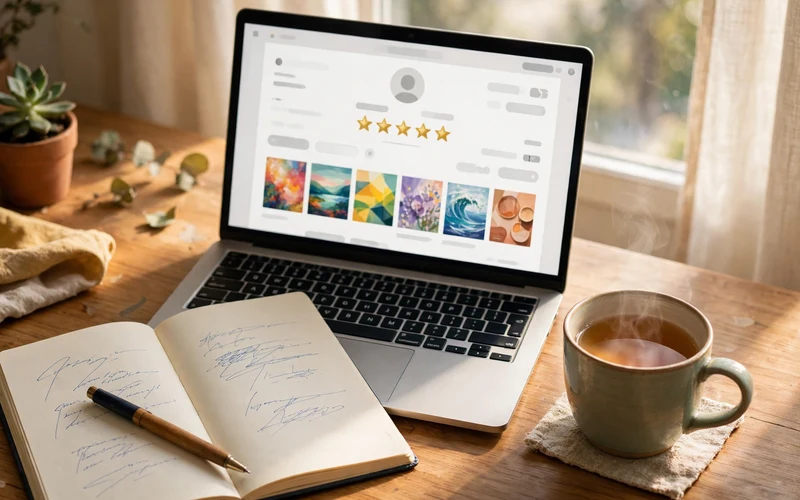
Step 6: Deliver Great Work and Earn Good Reviews
Deliver the work in the format the buyer asked for, and check your files before you send them. Open them once to make sure they are correct and complete. A small check saves you from a revision request and a frustrated buyer.
Write a short, friendly delivery message: what you delivered, how to use it, and that you are happy to help with small fixes. If the buyer asks for a revision, stay calm, read the request, and make the change. If they ask for work that was not in the order, explain kindly that you can add it as a gig extra. If a buyer is unhappy, ask what is wrong and offer to fix it. A calm reply can turn a bad review into a good one.
How to Grow After Your First Ten Orders
Once you have ten good reviews, add more gigs in the same area — for example, story templates if you design Instagram posts. Raise your prices too: $5 or $10 more on the Basic package is a safe step. Keep raising slowly as reviews grow.
Use Fiverr analytics: many views but few clicks means your image or title needs work; many clicks but few orders means your price or description needs work. Check once a week and fix the weakest step. Also build repeat buyers by messaging happy buyers after a few days and asking if they need more help.
Common Mistakes to Avoid
- Copying other sellers word for word: Buyers and Fiverr can spot copied gigs. Write your own title and description.
- Starting with a $5 price: A very low price brings difficult buyers and makes it hard to raise prices later.
- Offering too many services at once: A profile that offers everything sells nothing. Pick one service first.
- Replying late to messages: Buyers message several sellers at once. If you reply hours later, the order is often gone.
- Missing delivery deadlines: Late delivery hurts your Success Score and your reviews. Set a time you can keep.
- Using weak gig images: A blurry or generic image gets skipped in search. Show bright, clear samples of real work.
- Ignoring Fiverr analytics: If you never check impressions and clicks, you never know what to fix. Check once a week.

Conclusion
Making money on Fiverr as a beginner is not about luck. It is about one clear service, a gig buyers can find, fair prices, fast replies, and work delivered on time. Start small, study sellers who already do it, and build a profile buyers trust. Bring your first buyers to your gig, deliver with care, and earn your first reviews. Each review makes the next order easier, and steady work can grow into a real side income.
FAQs
Do I need experience to make money on Fiverr?
No. You need one skill you can deliver well and samples that prove it. Start with small, clear services such as social media design or proofreading. Your first reviews build trust faster than a long work history.
How much does Fiverr take from my earnings?
Fiverr takes a 20% fee from each order, including tips. If a buyer pays $50, you keep $40. Keep this fee in mind when you set your prices.
How many gigs can a new seller create?
New sellers can create up to four active gigs. As you complete orders and earn good reviews, Fiverr raises your level and lets you create more. Start with one strong gig.
How long does it take to get my first order on Fiverr?
It varies. Some sellers get an order in the first week, while others wait a few weeks. Sharing your gig outside Fiverr, replying fast, and using buyer requests can speed things up.
What is the best service to sell on Fiverr as a beginner?
The best service is one you can deliver well and show samples for. Popular beginner services include social media design, logo design, short video editing, voiceover work, and proofreading. Pick the one that matches your skills.
Do I need to pay to join Fiverr?
No, joining Fiverr and creating gigs is free. You only pay the 20% fee when you earn money. Optional paid tools exist, but you do not need them to start.
How do I get paid on Fiverr?
After you deliver an order and the buyer accepts it, Fiverr holds the payment for a short clearance period, then adds it to your balance. You can withdraw it through PayPal, Payoneer, or a bank transfer, depending on your country.
Can I make a full-time income on Fiverr?
It is possible over time, but it is not quick or guaranteed. Most beginners start with a side income and grow slowly as reviews, levels, and repeat buyers build up. Focus on steady progress.






- Be Respectful
- Stay Relevant
- Stay Positive
- True Feedback
- Encourage Discussion
- Avoid Spamming
- No Fake News
- Don't Copy-Paste
- No Personal Attacks
- Be Respectful
- Stay Relevant
- Stay Positive
- True Feedback
- Encourage Discussion
- Avoid Spamming
- No Fake News
- Don't Copy-Paste
- No Personal Attacks
