How to Make Money with Transcription Jobs for Beginners
Published: 7 Nov 2026
Transcription is one of the simplest online jobs a beginner can start. You listen to a recording and type what you hear. That is the whole job. You need no degree or expensive equipment — only good English, fast typing, and patience. Podcasters, researchers, lawyers, and businesses pay people to turn recordings into text. This guide covers the work, the pay, the tests, where to find jobs, and how to grow.

What Is Transcription Work?
Transcription means turning spoken words into written text. A client sends you a file, usually ten to ninety minutes long. You type every word, following a style guide for filler words, pauses, unclear audio, timestamps, and speaker labels.
There are three main types. General transcription — interviews, podcasts, meetings, and lectures — is the easiest place to start, with no special training needed. Legal transcription covers court hearings; it pays more but needs legal terms and strict formatting. Medical transcription pays best over time but usually needs a training course first.
Start with general transcription: it teaches the core skills for higher-paid work later. Most work is freelance: you choose your files, work from home, and get paid per audio minute or hour. Your pay depends on speed and accuracy, not hours sat at a desk.
What Skills Do You Need?
You need no qualification, but you do need four skills. First, good English spelling and grammar — every platform tests this. Second, fast typing: most want at least 60 words per minute with high accuracy. At 40 you can start, but hourly pay stays low until you speed up. Third, good listening: follow different accents, fast speakers, and people talking over each other. Fourth, focus: a one-hour file can take three or four hours when you are new.
You also need a quiet place to work: background noise makes audio harder to hear. You need no silent studio, just a calm room.
If you type below 60 words per minute, do not apply yet. Practise for two to four weeks first. Free tools such as Typing.com test your speed and help you improve. Twenty minutes a day can lift a slow typist to a workable speed within a month.
What Equipment Do You Need?
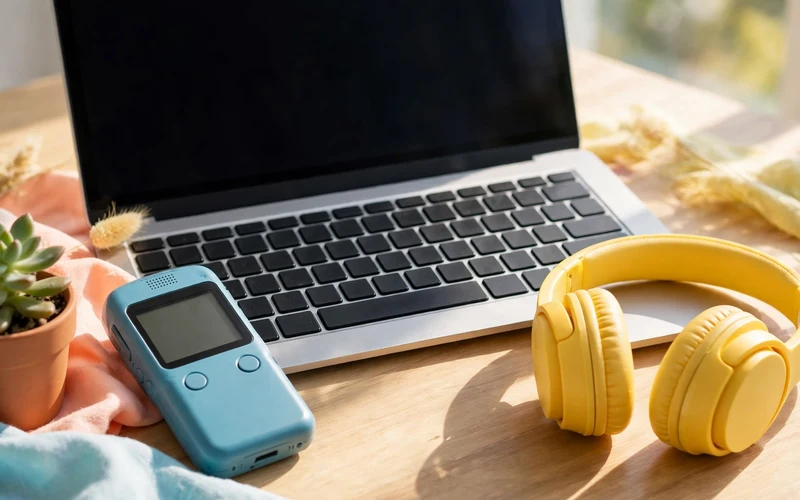
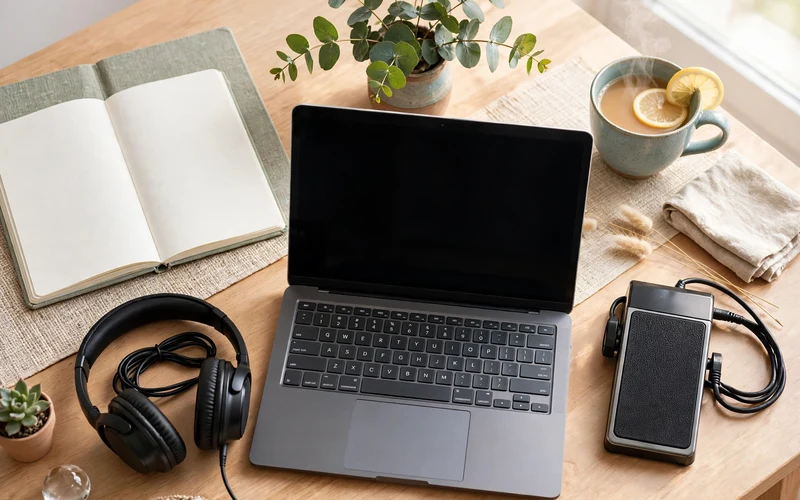
You can start with almost no money: a computer, stable internet, and good headphones. Headphones matter most. Cheap earphones make unclear words hard to hear, and that costs you time. Comfortable over-ear headphones are a smart first purchase.
Free software is enough to start. Express Scribe is a free player that slows down audio and controls playback with keyboard shortcuts. Most platforms have their own editor, so you may need no extra software.
Later, you can buy a foot pedal. It sits under your desk and lets you play, pause, and rewind with your foot, so your hands never leave the keyboard. A basic pedal costs around 30 to 80 US dollars (illustrative only). Beginners do not need it. Start with what you have and upgrade from your earnings.
How Much Does Transcription Pay?
Pay is modest at first and grows with speed and skill. You are usually paid per audio minute, not per hour of your time. One audio minute takes a beginner three to five minutes to type.
Typical general rates on beginner platforms are around 30 to 65 cents per audio minute (illustrative only, rates change often), often roughly 8 to 15 US dollars per hour of your time when you are new and slow. Some platforms pay per audio hour instead, often 15 to 22 US dollars per audio hour. One audio hour takes much longer than one hour to type, so check what a rate means before you accept a job.
Specialised work pays more. Legal transcription often pays around 1 to 1.50 US dollars per audio minute once you qualify (illustrative only). Experienced medical transcriptionists can earn around 15 to 25 US dollars per hour. Direct clients often pay 1 to 2.50 US dollars per audio minute (illustrative only). The long-term goal is to move from platforms to direct clients.
Nobody can promise a fixed monthly income. Pay depends on files taken, typing speed, and available work. Treat your first two months as a learning period. The money is small, but your speed and reputation are growing.
How to Practise Before You Apply
Do not apply on your first day. Practise first: every platform tests you, and a failed test can mean weeks of waiting.
In week one, test your typing speed and English with free online tests. If you type below 60 words per minute, practise twenty minutes a day. Read one platform’s style guide, such as Rev’s or GoTranscript’s, and learn its rules for filler words, speaker labels, and timestamps.
In weeks two to four, transcribe real audio. Download a free podcast episode, transcribe five minutes, and check your work against the published transcript if one exists. Do this three times a week with different audio: a clean interview, a lecture with technical words, and a conversation with people talking over each other. Time yourself, and keep your three best transcripts as a small portfolio.
How to Pass the Platform Tests
Almost every genuine platform tests you first, because clients pay for accuracy, not effort. First, read the style guide fully before the test. Style-guide mistakes cost marks even when the words are correct. Learn how the platform wants filler words such as “um” written, and when to add timestamps.
Second, listen to the whole file once before typing, to learn the topic, speakers, and accents. Third, work in a quiet room with good headphones. Accuracy matters more than speed.
Apply to two or three platforms at once. Approval rates and work change weekly, so several applications give you more chances. The three platforms most often open to beginners are Rev, GoTranscript, and TranscribeMe. All three test first and pay via PayPal. Check each platform’s website before you apply, because rules and rates can change. If you fail, practise your weak area and try again.
Where to Find Transcription Jobs
Beginner-friendly platforms are the best place to start, because they give you work without a portfolio. Rev is the most common starting point: it accepts beginners who pass its tests and pays per audio minute. GoTranscript also accepts beginners, runs a graded test, and pays weekly via PayPal. TranscribeMe gives short audio clips instead of long files, which suits beginners, and pays weekly past a small minimum balance.
Other platforms include Scribie, which pays per audio hour, and Speechpad. Check each platform’s website for accepted countries. Most pay in US dollars, so PayPal or your bank may charge a conversion fee.
After three to six months of platform work, look for direct clients. Podcast producers, law firms, and researchers hire directly and usually pay more. Create a simple Fiverr or Upwork profile with a clear niche, such as podcast transcription, and list your turnaround time. You can also email podcasters and offer a free five-minute sample. One good direct client can beat ten platform files.
How to Work Faster and Earn More
Your hourly pay is a speed game: the faster you type accurately, the more you earn. Learn keyboard shortcuts — play, pause, rewind, slow down — without touching the mouse. Use a text expander for words you type often, such as speaker names.
Slow down hard audio and use normal speed when it is clear. Slowing a messy section for one minute beats replaying it five times. Take a short break every hour: tired ears miss words.
Track your time honestly. For every file, note audio length, hours spent, and pay, then divide pay by hours for your real hourly rate. By your twentieth file, your rate should be climbing. If not, your files may be too hard. Pick short, clear files with one or two speakers: a clean thirty-minute file can pay better per hour than a messy sixty-minute one.
How to Spot Transcription Scams
Transcription is popular with beginners, so scammers target it. A real platform never asks you to pay a fee to join, buy training, or pay for a certificate. If a job asks for money upfront, walk away. A real client never asks for your bank password or a payment to “unlock” your earnings.
Be careful with posts promising very high pay for easy work, such as fifty dollars an hour for simple typing with no test. Real pay is modest, and real platforms always test you first. Check the platform’s website and read reviews from working transcriptionists first. If a job exists only in a chat message, with no website or clear pay terms, do not accept it.
Transcription Work Compared
Start with general work, then move to a fitting lane.
| Type of work | Who it suits | Typical pay level | Training needed |
|---|---|---|---|
| General transcription | Complete beginners | Modest, grows with speed | None, just practice |
| Legal transcription | Careful, detail-focused typists | Higher per audio minute | Legal terms and formatting |
| Medical transcription | Patient learners | Highest hourly | Medical terms course |
| Captioning and subtitling | Fast typists who like video | Similar to general | Timing and caption rules |

Common Mistakes to Avoid
Avoid these mistakes for smoother first months.
- Applying before you practise: Every platform tests you first, so build speed and practise before applying.
- Ignoring the style guide: Style-guide mistakes cost marks even when words are right, so read the guide before every test and job.
- Taking files that are too hard: Messy audio takes far longer to type, so choose short, clear files until you are stronger.
- Forgetting that pay is per audio minute: One audio hour takes hours to type, so work out your real hourly rate before you accept a file.
- Paying to join a platform: Real platforms never charge a joining fee, so walk away from jobs that ask for money upfront.
- Never tracking your time: If you do not track length, hours, and pay per file, you cannot tell whether your rate is improving.
- Staying on low-paid platforms forever: Platform work is a starting point, so after a few months, pitch direct clients or specialise.
Conclusion
Transcription is a real way for a beginner to earn money from home, but it rewards skill, not luck. You need no degree or expensive tools — only good English, 60 words per minute, good headphones, and patience. Start with general transcription, pass the test by following the style guide, and take small files to build speed. Track your hourly rate, learn from every correction, and after a few months move toward direct clients or a specialisation. The first month pays little, but its skills pay you for years.
FAQs
Do I need experience to start transcription jobs?
No. Platforms such as Rev, GoTranscript, and TranscribeMe accept applicants who pass their tests. You need good English and about 60 words per minute, but no formal qualification.
How much can a beginner earn from transcription?
Beginner pay is modest: around 30 to 65 cents per audio minute, often roughly 8 to 15 US dollars per hour of your time when you are new and slow. Your rate rises with speed and accuracy, and specialists and direct clients pay more.
What typing speed do I need for transcription?
Most want at least 60 words per minute with high accuracy. At 75 or more, work feels comfortable and pay is noticeably better. If you type slower, practise for two to four weeks first.
What equipment do I need to start transcription?
You need a computer, stable internet, and good headphones. Free software such as Express Scribe is enough to start. A foot pedal (around 30 to 80 US dollars) is a later upgrade, not a beginner need.
How do I get paid for transcription work?
Most pay through PayPal, usually weekly or once you reach a small minimum balance. Pay is per audio minute or per audio hour, not per hour of your time. Most pay in US dollars.
Is transcription a real job or a scam?
Transcription is a real job: podcasters, researchers, and lawyers pay for it daily. But scams exist. A real platform never asks you to pay a joining fee or buy training. If a job asks for money upfront or promises very high pay with no test, walk away.
Can I do transcription with no experience in Pakistan?
Yes. Most large platforms hire worldwide and pay through PayPal, so location matters less than your English and typing skills. Check each platform’s site for accepted countries; PayPal or your bank may charge a conversion fee.
How long does it take to become a fast transcriptionist?
Most beginners improve within four to eight weeks of practice. A one-hour file that takes four hours at first may take two hours after a few months. Speed comes from volume: take small files often and track your time.






- Be Respectful
- Stay Relevant
- Stay Positive
- True Feedback
- Encourage Discussion
- Avoid Spamming
- No Fake News
- Don't Copy-Paste
- No Personal Attacks
- Be Respectful
- Stay Relevant
- Stay Positive
- True Feedback
- Encourage Discussion
- Avoid Spamming
- No Fake News
- Don't Copy-Paste
- No Personal Attacks
