How to Make Money with Voiceover Work for Beginners
Published: 6 Nov 2026
Have you ever been told that you have a nice voice? If so, voiceover work could be a good way for you to earn money from home.
Voiceover work means you use your voice to record audio for other people. You do not need to show your face. You do not need a big studio. You need a clear voice, a quiet room, and a simple plan.
This guide shows you how to start, step by step.
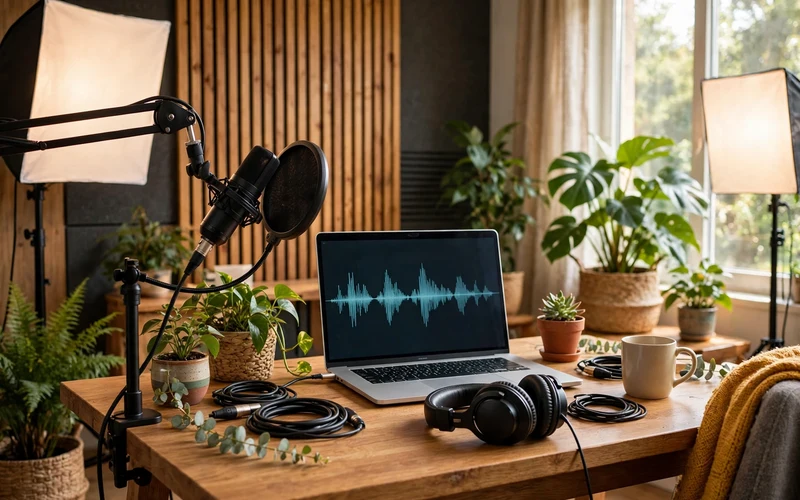
What Is Voiceover Work?
Voiceover work is spoken audio that you record for a client. The client uses your voice in a video, an ad, a course, or an audiobook.
Think of a video ad on YouTube. A voice says, “Try this new app today.” That is a voiceover. Think of an audiobook. The person who reads the whole book out loud is a narrator.
This work is not the same as starting a podcast. A podcast is your own show. You pick the topic, and you earn money later, if the show grows. Voiceover work is different. A client gives you a script. You read it in the style the client wants. You send the audio file, and the client pays you. It is paid voice work for ads, videos, and audiobooks, not your own show. You do not need a perfect voice. You need a clear voice, a good speed, and a natural tone.
Types of Voiceover Jobs for Beginners
Commercial voiceover is for ads on TV, radio, YouTube, and social media. These jobs are short, often 15 to 60 seconds. They need energy and a clear style.
Video narration is for YouTube channels, online courses, and business videos. You read a script that explains a topic.
E-learning voiceover is for lessons and courses. The style is calm and clear. Audiobook narration means you read a full book out loud. This takes many hours, so it is a goal for later, not a first job.
Corporate voiceover is for training videos, phone messages, and product demos. The style is warm and professional. Character voice work is for games and cartoons. This needs acting skills and a range of voices. Try it later, after you learn the basics.
How to Make Money with Voiceover Work: 7 Simple Steps
Follow these steps in order. A strong base will save you time later.
Step 1: Train Your Voice Every Day
Your voice is your main tool. Train it for 15 minutes each day. Read a short text out loud. Use a news story, a blog post, or a page from a book. Record yourself on your phone, then listen. Is your speed too fast? Is your voice clear? Do you sound bored, or do you sound warm?
Practice breathing. Take a slow breath before a long sentence. Do not rush. Try different styles. Read the same line in a happy way, then in a calm way, then in a serious way. Free voice training videos can help you learn mic technique and pacing.
Step 2: Set Up a Simple Home Studio
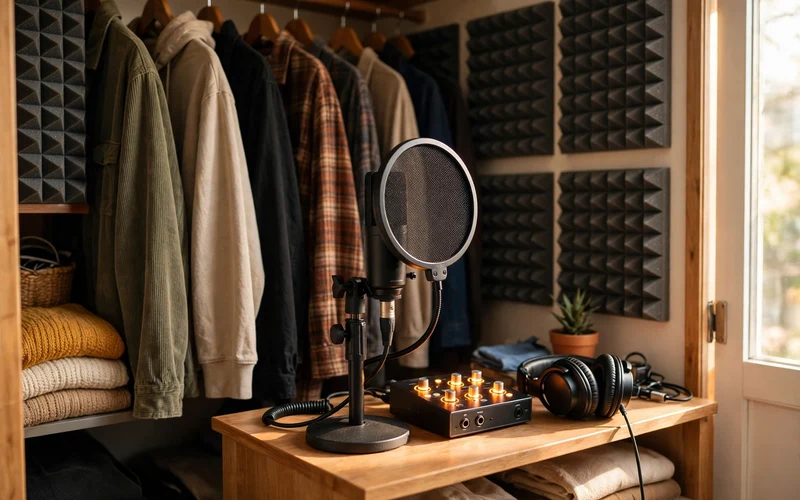
You do not need a costly studio. You need a quiet room and clean sound. A small closet full of clothes is a great place to start. Clothes absorb echo and make your voice sound warm.
You need a microphone. A good USB microphone is enough for a beginner. It plugs straight into your computer. You also need closed-back headphones and a pop filter, a small round screen in front of the mic. It stops harsh sounds when you say words with P and B. Turn off fans and TVs before you record.
Step 3: Learn Basic Audio Editing
Clients expect clean audio. That means no long pauses, no loud breaths, and no background noise. Use free software to start. Audacity is free and works on most computers. GarageBand is free on Mac.
Learn four basic skills first. One, cut out mistakes and repeat lines. Two, remove long silences at the start and end. Three, use a simple noise reduction tool if you hear a soft hiss. Four, export the file as MP3 or WAV, as the client asks. Keep your voice natural.
Step 4: Record a Short Demo Reel
A demo reel is a short audio sample that shows what your voice can do. Keep it near 60 seconds.
Record four to six short clips. Each clip should be 10 to 15 seconds long. Use different styles: one ad-style clip, one calm narration clip, and one friendly explainer clip. Do not record a demo too early. Practice for one or two weeks first. A weak demo can hurt you more than no demo.
Step 5: Set Your Price in a Simple Way
New voiceover artists often ask, “What should I charge?” There is no single right price. It depends on the job length, the use, and your skill. Start simple. Charge per project, not per hour. Charge one price for a short script up to 100 words. Charge more for a longer script or a longer video.
For audiobooks, many artists charge per finished hour of audio. Do not work for free for long. One or two low-cost jobs for practice are fine. After that, charge a fair price.
Step 6: Find Your First Jobs
Start with freelance sites. Fiverr and Upwork have voiceover jobs, but the pay can be low and the race is tough. Still, they are good for your first reviews and real practice.
Next, try voiceover marketplaces. Voices and Voice123 are two large sites where clients post jobs and artists send auditions. Some of these sites charge a yearly fee for full access. Read the terms first. Also, try ACX for audiobook work. It connects authors with narrators. You can also pitch small creators with a short message and your demo link.
Step 7: Deliver Good Work and Ask for Reviews
When you get a job, read the brief with care. Ask the client about the style, the speed, and the file type. Record the job, edit it, and listen to it once more before you send it. Send it on time.
If the client asks for a small change, do it fast and with a smile. After the job, ask for a short review. A few good reviews will help you get the next job much faster.
What Equipment Do You Really Need?
Many beginners spend too much money at the start. You do not need to do that. You need a quiet room, a USB microphone, closed-back headphones, a pop filter, free editing software, and a computer or a laptop. That is enough to start.
Later, you can add an audio interface, a better mic, and foam panels. Skill matters more than gear. Take care of your voice: drink water and rest it when it feels tired.
Voiceover Rates: What to Expect as a Beginner
Rates vary a lot. A short ad can pay more than a long narration job. A job for a big brand can pay more than a job for a small channel. The table below shows example price ranges that beginners often see on freelance sites. These are illustrative only. They are not a promise.
| Job Type | Example Price Range (Illustrative Only) | Notes for Beginners |
|---|---|---|
| Short script up to 100 words | $20 to $75 per project | Good first jobs; quick to record |
| YouTube narration, short video | $50 to $150 per project | Steady work; learn the style fast |
| E-learning, per short lesson | $40 to $120 per lesson | Calm, clear delivery matters most |
| Commercial spot, 30 seconds | $100 to $300 per project | Needs energy; harder to win early |
| Audiobook, per finished hour | $50 to $150 per finished hour | Long work; best after some practice |
In the first month, focus on skills and samples, not on big money.
Your 30-Day Plan to Start Voiceover Work
Days 1 to 7: Practice your voice for 15 minutes each day. Set up your quiet room. Get a USB mic and headphones. Learn Audacity basics. Record and edit one short test each day.
Days 8 to 14: Practice different styles. Record a test ad, a test narration, and a test lesson clip. Ask a friend to listen and tell you what sounds clear.
Days 15 to 21: Record your demo reel. Keep it to 60 seconds. Make a profile on one freelance site. Upload your demo. Write a short bio.
Days 22 to 30: Apply for five to ten small jobs. Send short pitches to three small creators or businesses. Record every audition with care. If you get no job in 30 days, do not quit. Improve your demo and try a new niche.
Your 90-Day Plan to Grow
Days 31 to 60: Aim for two to three small paid jobs. Ask each client for a review. Update your demo with your best new clip. Try one new platform. Learn one new skill, such as better editing or a new voice style.
Days 61 to 90: Aim for repeat clients. Offer a simple package, such as three short videos for one price. Raise your price a little for new clients. Pick a niche. If e-learning jobs suit you best, focus on them.
7 Mistakes Beginners Should Avoid
- Recording in a noisy room: Noise kills a good voice, so fix the room first.
- Buying costly gear too soon: Start simple, and spend money only when you need it.
- Recording a demo too early: Practice first, because a weak demo can close doors.
- Auditioning for every job: Pick jobs that fit your voice and skill. Quality beats quantity.
- Speaking too fast: Slow down, because clear and calm wins more jobs than fast and rushed.
- Ignoring the brief: Read what the client wants, and ask questions before you record.
- Giving up too soon: The first job is the hardest, so keep going.
Conclusion
You can make money with voiceover work as a beginner. You do not need a perfect voice or a costly studio. You need a clear voice, a quiet room, basic editing skills, a short demo, and a simple plan to find clients. Start small. Practice each day. Record your demo when you are ready. Apply for small jobs. Deliver good work on time. Ask for reviews. Start today with 15 minutes of practice.
FAQs
Can I start voiceover work with no experience?
Yes, you can start with no experience. Practice your voice, learn basic recording, and build a short demo. Start with small jobs on freelance sites. Your first jobs will teach you a lot.
Do I need a professional studio to make money with voiceover?
No, you do not need a professional studio. A quiet room, such as a closet full of clothes, can work well. You need a good mic, headphones, a pop filter, and free editing software. Clients care about clean sound, not costly gear.
What is the best microphone for a voiceover beginner?
A good USB microphone is the best choice for most beginners. It is simple to use and plugs straight into your computer. Later, you can move to a better mic with an audio interface if you want higher quality.
How do I make a voiceover demo reel?
Record four to six short clips, each 10 to 15 seconds long. Use different styles, such as an ad, a narration, and a calm lesson. Keep the full demo near 60 seconds. Record in a quiet room and edit out mistakes.
Where can I find voiceover jobs as a beginner?
Try freelance sites like Fiverr and Upwork for your first jobs. Try voiceover marketplaces like Voices and Voice123 for auditions. Try ACX for audiobook work. You can also pitch small YouTube creators and course makers.
How much can a beginner earn from voiceover work?
It varies a lot by job type, client, and skill. Short jobs may pay a small project fee, while longer jobs pay more. Do not expect a full income in the first month. Focus on skills, samples, and reviews first.
Do I need acting skills for voiceover work?
Basic acting skills help, but you do not need to be a trained actor to start. You need to sound natural and match the style of the script. Practice reading in happy, calm, and serious tones.
Is voiceover work the same as starting a podcast?
No, it is not the same. A podcast is your own show, and you choose the topic. Voiceover work is paid work for a client. The client gives you a script, you record it, and the client pays you.






- Be Respectful
- Stay Relevant
- Stay Positive
- True Feedback
- Encourage Discussion
- Avoid Spamming
- No Fake News
- Don't Copy-Paste
- No Personal Attacks
- Be Respectful
- Stay Relevant
- Stay Positive
- True Feedback
- Encourage Discussion
- Avoid Spamming
- No Fake News
- Don't Copy-Paste
- No Personal Attacks
