How to Become an Online Bookkeeper for Beginners
Published: 6 Nov 2026
Do you like numbers, order, and quiet work from home? Many small business owners need help with money records. They have no time to track every sale, bill, and payment. They need a careful person they can trust. That person can be you.
An online bookkeeper works from home and helps businesses keep clean money records. You do not need an accounting degree or years of office work. You need basic maths, good habits, and the right training. Accuracy matters more than speed.
This guide shows you the steps: the job, the skills, the tools, the training, the pricing, and how to find your first clients. You will also get a 30-day plan and a 90-day plan.
What Is an Online Bookkeeper?
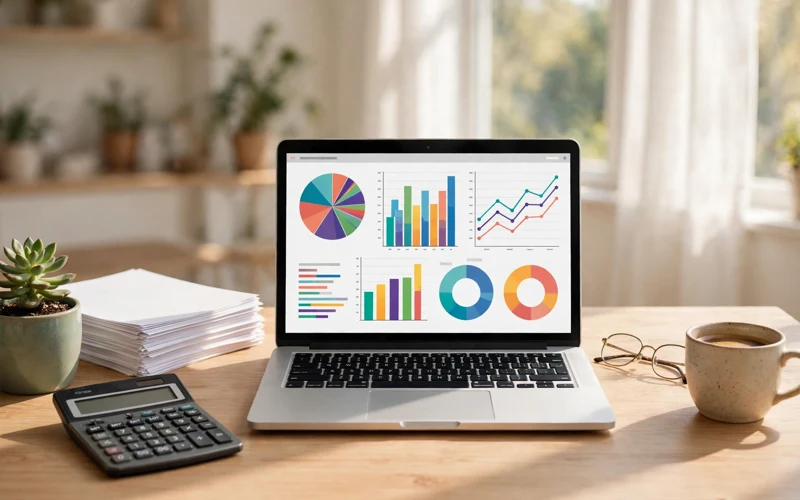
An online bookkeeper records and organises the money of a business, using cloud software. You do not visit an office. You work from home, and your clients may live anywhere.
A bookkeeper is not the same as an accountant. A bookkeeper rec/ords what happened. An accountant uses those records for tax, advice, and reports. In short, a bookkeeper keeps the books clean.
Most small businesses need a bookkeeper. A shop, a salon, a coach, an online seller, and a small clinic all have money coming in and going out. If no one tracks it, the owner cannot tell if the business makes money.
What Does an Online Bookkeeper Do Every Day?
Your daily work is simple, but it needs care. You check bank and card transactions, sort each one into the right category, and match the books with the bank statement. This is called reconciliation. It helps you find errors.
You also send invoices, track who has paid, record bills and due dates, and keep receipts in order. At the end of the month, you prepare a short report showing income, expenses, and profit.
Some clients also need help with payroll, which means paying staff on time. As a beginner, do not take payroll work at first. It has strict rules. Start with simple tasks.
You will also answer simple questions, such as, “How much did I spend on ads last month?” Good bookkeepers explain numbers in plain words.
Do You Need a Degree or Experience?
No. Many bookkeepers start with no degree and no office experience. What you need is a clear plan, free or low-cost training, and real practice.
You do need basic skills. Be good with simple maths. Like detail and order. Be honest and careful with other people’s money. Meet deadlines and learn new software. If you can use a computer and follow a clear process, you can learn bookkeeping.
It also helps if you can write clear messages. Most of your work is online, by email or chat. Short, clear, polite messages build trust.
One more thing matters: respect privacy. You will see bank details, sales, and pay records. Never share them. Trust is the heart of this work.
Skills You Need to Learn First
Start with the basics. Learn what income, expenses, assets, and liabilities mean, and how a profit and loss report and a balance sheet work. Learn them one by one.
Next, learn debits and credits, the two sides of every money record. At first, they can feel confusing. With practice, they become clear. Free videos and courses can help.
You also need accounting software. Most clients use QuickBooks Online or Xero. Learn one tool well first, then the second one.
Excel or Google Sheets is also useful for checks and simple trackers. Learn sorting, filtering, and sums. Keep a checklist for each client, files in clear folders, and check your work twice.

How to Become an Online Bookkeeper: 8 Simple Steps
Step 1: Learn the Basics in Two to Four Weeks
Start with free courses and videos. Learn the basic terms first, then how money moves in a small business. Spend one hour a day. In two to four weeks, you will know the basic ideas.
Step 2: Get Free Certification in QuickBooks Online or Xero
QuickBooks Online offers free training and a free exam through its QuickBooks Online Accountant programme. When you pass, you become a QuickBooks ProAdvisor. Many guides say the training takes about 20 to 30 hours. Xero also offers free Advisor certification, a good second step. Learn QuickBooks first if most clients in your area use it. Later, you can add a paid credential, such as the NACPB or AIPB. Check their rules and costs first.
Step 3: Practise on Real Books Before You Charge
Practice is the key step many beginners skip. Do not take a paying client until you have done the work at least once. Find two or three small sets of books to practise on. Ask a friend with a small business, a local shop, or a charity. Offer one or two months of books for free, in exchange for feedback and a testimonial. Set up a demo company, run a full monthly close, reconcile the bank, and make a profit and loss report. Leave messy books and payroll for later.
Step 4: Choose a Simple Niche
A niche is one type of client you serve. Good beginner niches include online sellers, coaches, small shops, salons, and real estate agents. Pick one you understand or like. When you focus on one niche, you learn its common costs and income. For example, online sellers pay platform fees and shipping. This knowledge helps you sort transactions fast and spot errors.
Step 5: Set Up Your Simple Business
You need a good computer, fast internet, and a quiet place to work. You also need a professional email address and a simple way to take payments. Write a short service list: what you do and what you do not do. For example, you do monthly bookkeeping, reconciliation, invoicing, and reports. You do not give tax advice or do payroll yet. Use a simple agreement, often called an engagement letter, that states your services, price, and payment method. Ask the client to sign it before you start.
Step 6: Decide How to Price Your Work
Beginners often ask, “What should I charge?” It depends on your country, niche, and client size. Many guides report that new freelance bookkeepers in the US charge about 20 to 35 dollars an hour. Monthly pricing is better for most beginners: it gives steady income, and the client knows the cost in advance. The table below shows example monthly packages. These figures are illustrative only, not fixed prices.
| Package | What it includes | Example monthly price (illustrative only) |
|---|---|---|
| Starter | Bank reconciliation, expense sorting, one monthly report | $150–$250 |
| Standard | Starter plus invoicing, bill tracking, and a monthly call | $300–$500 |
| Growth | Standard plus cleanup help and weekly checks | $500–$800 |
Start low for your first two or three clients, then raise your price as you gain proof and reviews. Do not stay cheap for long. Fair prices attract serious clients.
Step 7: Build a Simple Profile and Portfolio
Make a simple profile on Upwork or Fiverr, and a LinkedIn profile too. Use a clear headline, such as “Online Bookkeeper for Small Businesses | QuickBooks and Xero”. Add your free certifications and your practice work, without private numbers. Describe what you did, not the client’s money. Add one or two honest testimonials. You can also make a one-page website or portfolio. Keep it short: who you help, what you do, and how to contact you.
Step 8: Find Your First Clients
Finding clients takes time. Most beginners need a few months. That is normal. First, finish your ProAdvisor profile and ask happy clients for reviews. Second, post twice a week where your niche spends time, sharing one useful tip each time. Third, offer a cleanup project: many owners have months of untouched books. Fix them once, then offer a monthly plan. Join business groups, answer simple questions, and be helpful first. Tell people you know. Many first clients come from a simple message: “I am starting as an online bookkeeper. Do you know anyone who needs help?”

Tools You Will Use Every Day
You do not need many tools: one accounting tool, one spreadsheet tool, and one way to share files. QuickBooks Online and Xero are the main tools. Google Sheets or Excel helps with checks. Google Drive or Dropbox stores receipts and reports. You may also use a receipt app, a task tool, and Zoom or Google Meet for calls. Keep your list short and learn each tool well. Do not pay for many tools before you have clients. Use free plans first.
Your 30-Day Plan
Here is a plan for your first month. It is not a promise of income. It builds skill and proof. Days 1 to 7: Learn the basics, one hour a day. Choose QuickBooks or Xero, open a free accountant account, and start the free training. Days 8 to 14: Finish the first certification lessons. Practise in a demo company: sort transactions, reconcile a bank account, and make a profit and loss report. Days 15 to 21: Find two practice clients. Offer free help for one month, ask for feedback, and fix any errors. Days 22 to 30: Finish your profile, add your certification and testimonials, write your service list and price, and post your first helpful tip online.
Your 90-Day Plan
Month one is for learning and practice. Month two is for proof and pricing: finish your second certification if you can, write your engagement letter, set your monthly packages, and make your portfolio page. Month three is for clients. Post twice a week, apply for small jobs, offer cleanup projects, and talk to local business owners. Aim for your first paying client, not ten clients. After 90 days, review your work. Keep what works. Drop what does not work. Then set a new 90-day goal.
Common Mistakes to Avoid
Many beginners make the same mistakes.
- Taking messy books too soon: Start with clean, simple books.
- Giving tax advice: Tax rules are strict and change by country. Tell the client to ask a tax expert.
- Working without an agreement: Without one, clients may ask for extra work for free or pay late.
- Keeping poor records: Keep good records: one folder per client and a copy of each report.
- Undercharging for too long.
- Trying to serve everyone: Pick one niche and learn it well.

Conclusion
You can become an online bookkeeper as a beginner. You do not need a degree. You need basic skills, free training, real practice, and a clear plan. Learn QuickBooks or Xero. Practise on small books. Choose a niche. Set fair prices. Build a simple profile. Find your first client with helpful posts and honest work. It is not a get-rich-quick job, but it can grow into a stable service business. Open the free training today. In 90 days, you can be ready for your first paying client. Start now, and keep going.
FAQs
Do I need an accounting degree to become an online bookkeeper?
No. Most small business bookkeeping needs basic skills, free certification, and real practice. A degree can help later, but it is not needed to start.
How long does it take to become an online bookkeeper?
It depends on your pace. Many beginners learn the basics in two to four weeks. Certification takes about 20 to 30 hours. Most people feel ready for a simple client in three to six months, after practice.
Is QuickBooks or Xero better for beginners?
Both are good. QuickBooks Online is very common in the US. Xero is also common in many countries. Start with the one your clients use most, then add the second one.
Can I become a bookkeeper with no experience?
Yes. Start with free training, then practise on real books for free or at a low price. Use those jobs to build proof and testimonials. Small, simple clients are the best first step.
How much can a beginner bookkeeper charge?
Prices vary by country and client size. Many guides report that beginners in the US start near 20 to 35 dollars an hour, or with low monthly packages. Start low, then raise your price as you gain proof.
Do I need to give tax advice as a bookkeeper?
No, not unless you have the right credential. Bookkeeping is about recording money. Tax advice is a separate job with strict rules. Tell clients to ask a tax expert.
What is the hardest part of online bookkeeping?
Finding the first client and staying organised. Learning the software is simple with practice. Finding clients takes time and steady effort. A clear niche and honest work make it easier.
Can I work as an online bookkeeper from any country?
In most cases, yes, if you have a computer and internet. But rules, tax, and payment methods vary by country. Check the rules where you live.






- Be Respectful
- Stay Relevant
- Stay Positive
- True Feedback
- Encourage Discussion
- Avoid Spamming
- No Fake News
- Don't Copy-Paste
- No Personal Attacks
- Be Respectful
- Stay Relevant
- Stay Positive
- True Feedback
- Encourage Discussion
- Avoid Spamming
- No Fake News
- Don't Copy-Paste
- No Personal Attacks
